How to Take Accurate Baby Temperature Readings Without Waking Your Sleeping Child
Discover practical techniques for monitoring your child's fever during sleep using silent vibration alerts and non-touch forehead scanning, plus when to switch to ear mode for medical accuracy.
Why Checking Temperature During Sleep Matters
When your baby runs a fever, monitoring temperature changes throughout the night helps you catch spikes early and decide whether medical attention is needed. The challenge? Traditional thermometers beep loudly and require contact that disrupts sleep just when your little one needs rest most.
The solution lies in understanding which measurement method works best for sleeping children and how to use modern dual-mode devices that eliminate noise and minimize disturbance.
Step 1: Start with Non-Touch Forehead Scanning
For initial checks on a sleeping baby, forehead mode offers the gentlest approach. The iProven Ear Thermometer with Non-Touch Forehead Function, Superior Accuracy delivers indicative readings in 3 seconds by hovering over the forehead without any contact.
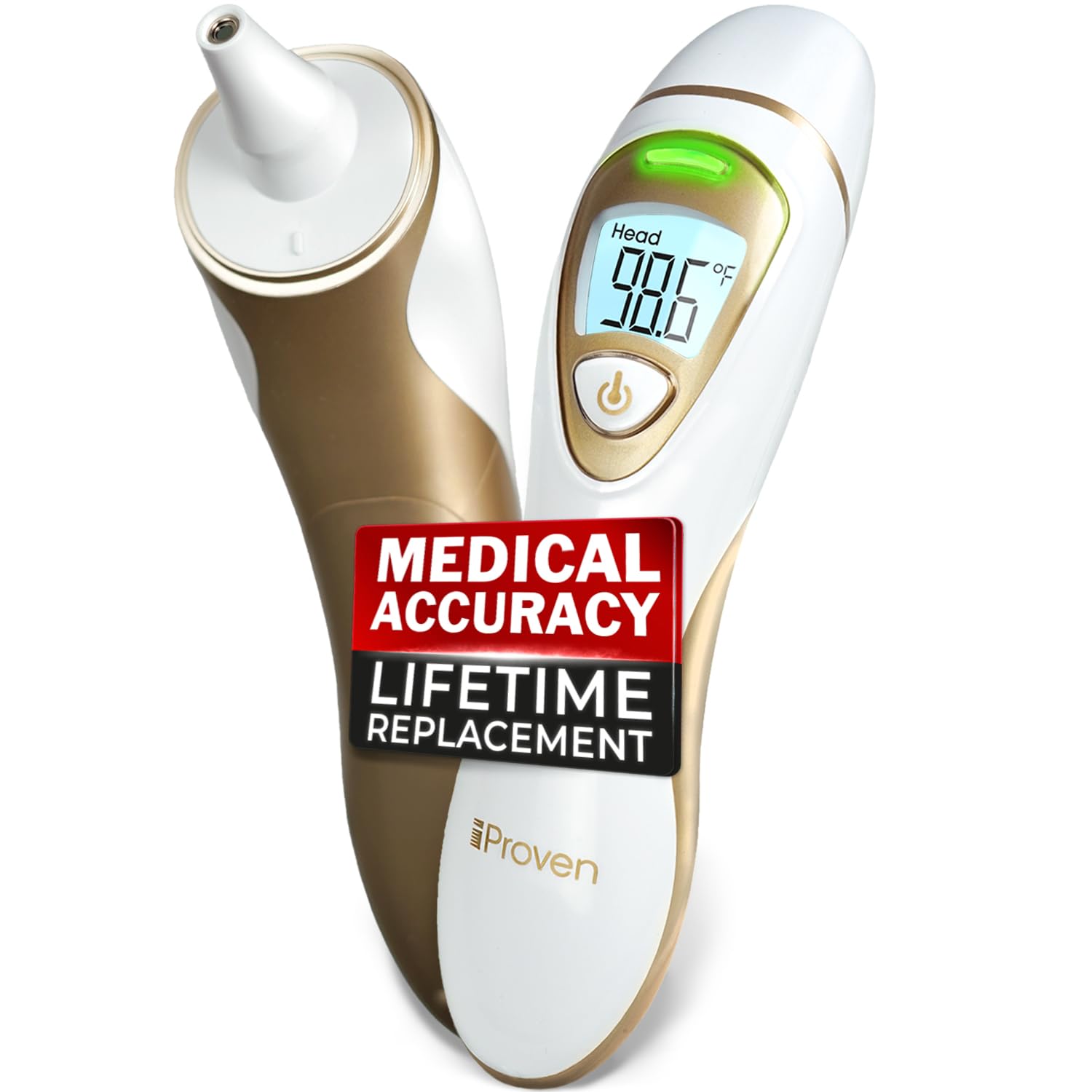
Position yourself about one inch from your child's forehead, press the button once, and wait for the silent vibration alert. This method works beautifully for quick trend monitoring without physical contact.
Step 2: Switch to Ear Mode for Medical Accuracy
When you need clinically accurate readings to report to your pediatrician or decide on medication, ear measurements provide instant, medically reliable results. Simply place the probe gently in the ear canal while your baby sleeps on their side.
The DMT-77 model stores up to 20 readings, letting you track temperature patterns over hours without writing anything down. This memory function proves invaluable during nighttime fever management when you're too tired to keep notes.
Step 3: Use the Silent Vibration Alert
The vibration alert feature changes everything for nighttime monitoring. Instead of a beep that wakes the entire household, you feel a gentle pulse in your hand when the reading completes. This lets you check temperatures multiple times throughout the night without disturbing your child's sleep cycles.
The intelligent fever indicator immediately shows whether the reading falls in normal, fever, or hypothermia ranges through color coding, so you can make quick decisions even in dim bedroom lighting.
Key Features That Make Silent Monitoring Possible
- Dual measurement modes: Non-contact forehead scanning for quick checks, ear mode for medical accuracy
- One-button operation: Simple enough to use in the dark without fumbling
- Silent vibration: Replaces audible beeps that disturb sleep
- 3-second forehead readings: Fast results minimize hovering time over your sleeping child
- 20-reading memory: Automatic tracking eliminates manual logging during exhausting nighttime hours
- Fahrenheit and Celsius options: Switch units to match your pediatrician's preference
When to Use Each Mode
| Situation | Recommended Mode | Why |
|---|---|---|
| Quick nighttime checks | Forehead (non-touch) | Zero contact, minimal disturbance |
| Before giving medication | Ear | Medically accurate, instant results |
| Monitoring fever trends | Either mode | Use memory function to track changes |
| Reporting to doctor | Ear | Clinical accuracy required |
Our Verdict
This approach transforms nighttime fever management from a stressful wake-the-baby ordeal into a smooth monitoring routine. The dual-mode design means you're never choosing between convenience and accuracy—you get both in one device. Parents of light sleepers especially appreciate the vibration alert, which eliminates the anxiety of whether a beep will undo an hour of rocking.
The 20-reading memory removes another layer of nighttime stress by automatically tracking patterns, letting you focus on comforting your child rather than fumbling for pen and paper. The one-button operation and 3-second forehead readings mean minimal time hovering over your sleeping baby.
Who This Method Suits
Parents of infants and toddlers who wake easily from sound will find the silent monitoring approach essential. It's equally valuable for families with multiple children in shared rooms, where a beeping thermometer wakes siblings. The device works for all ages, so it grows with your family from newborn through senior years.
Who Should Skip This Approach
If you prefer traditional under-arm measurements or exclusively use rectal thermometers for newborns under three months (as some pediatricians recommend), this dual-mode device won't replace your existing method. Families who don't mind audible alerts may not need the vibration feature.
Related Buying Guides
- Back-to-School Potty Training: Essential Toilet Seats for September Success
- ROSEGIN Diaper Bag Backpack Features Explained: 35L Capacity, 16 Pockets, and a Back Panel You'll Actually Use
- Noise Reduction Testing: Alpine Muffy Baby vs Nuby Soft Sounds 2026
- How to Safely Feed Your Baby with Temperature-Sensing Spoons
- Best Baby Earmuffs Under $35 for Outdoor Events: Budget Protection That Works
- Best Baby Earmuffs for Fourth of July Fireworks 2026: Keep Tiny Ears Safe